
The Unveiling by Quan Barry – Book Review
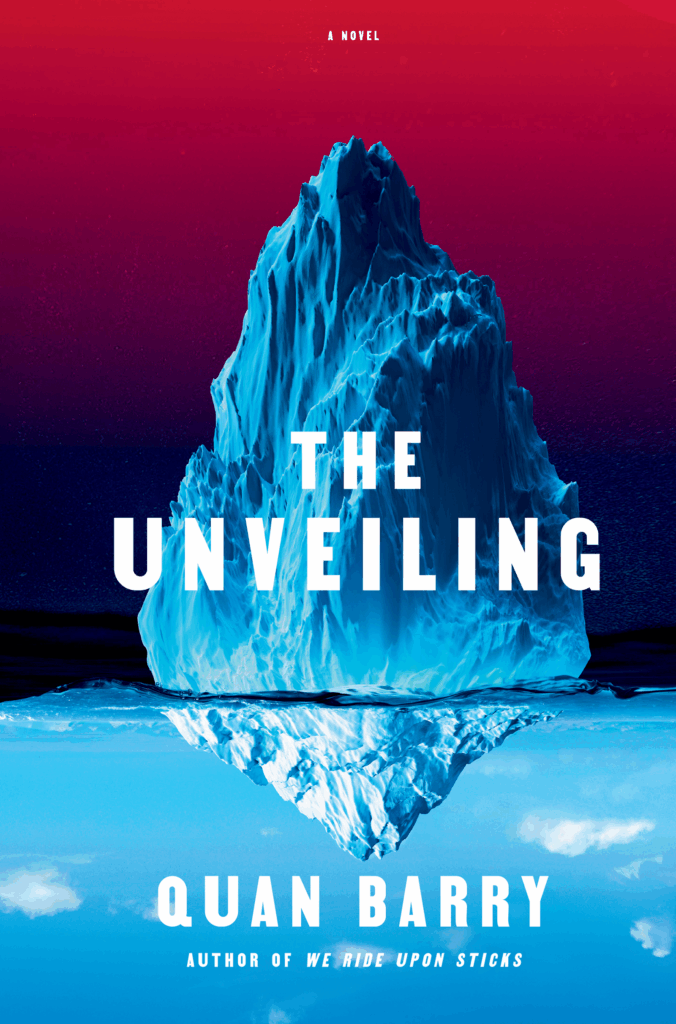
“Quan Barry offers neither comfort nor closure as she questions the limits of the human bonds that connect us to one another, affirming there are no such things as haunted places, only haunted people.” – Grove Atlantic publishers
Publication date: October 14, 2025
The Unveiling by Quan Barry is by far one of the best books I’ve read in 2025. Thank you Netgalley and Grove Atlantic publishers for the gifted copy of this book in exchange for an honest review. All opinions expressed below are my own.
The Unveiling is a deeply layered exploration of human nature as violent when stripped of its social scripts and conditionings, as well as the subjectivity of human beliefs and traditions. Carefully crafted and critically provocative, this book will prompt you to, like the iceberg, turn your life upside down to question your own beliefs, examine their violent histories, and unveil who you truly are when all the social scripts and conditionings are stripped away. Are we truly “better” and more moral than the animals? What is our true human nature when everything else we’ve been taught is stripped away?
Striker (Veronique) is a 40-year-old filmset scout for the movie industry. She travels with a group to visit Antarctica to assess whether it’d be a suitable environment for an upcoming film set. Carrying buried childhood traumas and blackout periods in her memory, Striker is positioned as an unreliable narrator from the beginning. She also admits to putting words into people’s mouths, giving them fake names, and making up their characters in her head to fit stereotypes she uses to interpret them.
Striker’s involvement in the film industry suggests she is good at reading people and the “characters” they play when interacting with others. A recurrent problem highlighted in the novel is how human habits and behaviours are blindly acted out without people questioning them. They interact with the world using the script society has given them and they don’t question it. The teen in the novel is the only one questioning everything; adults are shown to be complacent and blind. In addition, some of the men’s questions exposes the sexism within their belief systems and the same happens with the hidden racism of many of the crew.
The book makes explicit reference to Lovecraft and The Rime of the Ancient Mariner by Coleridge. Beyond his famed writing, Lovecraft was unveiled to be a racist, much like the characters Striker encounters in Antarctica. In my opinion, this book also alludes to Othello with its themes of racism while navigating English society, as well as Lord of the Flies. The reference to The Rime of the Ancient Mariner occurs right at the beginning of the novel where an albatross-like bird crashes into the boat and dies, bringing bad luck upon the ship’s crew and subsequent events. Who will have to wear the burden of the bird around their necks to atone for their sins? Is their sin blindly following along the scripts written by white settler men, or is it something more inescapable like our base human nature?
A literary reference made in the book that reinforces this theory for me is The Lottery. In this short story, citizens of a small-town stone somebody for something that, in our current society, would not be considered a sin. The novel repeatedly stresses the subjectivity of what is considered “right” and “wrong” and the fact that so many North American traditions and behaviours are accepted only because we’re conditioned from a young age to accept them while never being taught their (often racist and sexist) context. The most complacent and unquestioning are the white people travelling with Striker; they have become too comfortable in their mannerisms and beliefs, creating a false sense of security. The first sign of this is everyone la blind belief in the leader Percy’s reassuring them that there’s no danger when the icebergs are clearly melting at a rapid pace, there’s active volcanos on the island, and not all the animals on the island are safe. They don’t see the bad omens that their behaviours and beliefs hold, such as clinking their water glasses. Their blindness and complacency lead to their downfall; the ramifications of centuries of this bad karma unleashes horrors in Antarctica.
After the death of the bird, Striker and her crewmates encounter a boating accident that leaves them stranded on Deception Island. Antarctica becomes a no-man’s land where no one society or culture is dominant anymore. The flipping iceberg that causes their boating accident is a metaphor of the re-evaluation of beliefs and standards after the truth behind beliefs and traditions is uncovered. Only then do the crewmates realize or unveil how certain traditions are steeped in racism, bigotry, hate, violence, injustice, etc. and are therefore still active today in more muted or passive forms. What really is beneath the surface of seemingly harmless actions and socio-political systems? Are humans really that different from animals? Are they truly more moral and supportive than animal societies when everything else is stripped away and unveiled about their true nature?